22.1.12

Japan the Series: Day 5

    Despite an afternoon departure flight, on our fifth and final day in Japan we still managed to engage in a couple of touristy activities that resulted in two of the best views in Tokyo.  Views that served as the perfect lasting memories of an unforgettable trip. 


    Our first view came via the sea from a morning riverboat cruise down the Sumida River into Tokyo Bay. We had stumbled across the riverboat cruise terminal from our first day in Asakusa, but we didn't explore further as we thought it would be too expensive. However, as we found ourselves again in this area on our last day, we decided to check it out and found it surprisingly reasonably priced. For just about 10 dollars Canadian, we were treated to a (somewhat) guided 50 minute tour of the river, highlighting the diversity of architecture along the riverbank and the importance that these waterways serve in Tokyo's history. It was quite stunning, and a certainly more relaxed way to travel compared to the bustle of the subway system.


     Our second view of the city came via the sky on the observation deck at the Tokyo Metropolitan Government Building. The towering office building stands at 243 metres high and with an observation deck on the 45th floor, it provided some amazing panoramic views of the city and at no cost! Mt. Fuji stands in the distance from one window (of course it was too foggy to see), while from another you can see Tokyo Tower and the new Sky Tree Tower, which when it opens will be the tallest tower in the world. No matter which way you look, the city seems endless; building on top of building, most only existing as a micro speck of space in your line of view. 


      When travelling almost exclusively on the subway system, it is easy underestimate the sheer volume that these mega-cities encompass, as you never see just how much distance you can travel underground. These two incredible views gave us the chance to put Tokyo into perspective: a city so immense, so diverse, and so unique, only Tokyo. 
Reflection of the Sky Tree tower in the Asahi brewery building
One of the many bridges over the Sumida river

Tokyo Bay
Apartment buildings in Tokyo Bay
A small glimpse into old world Tokyo
A familiar sight after five days
Tokyo Metropolitan Government Building
I think if you squint really hard you can see Mt. Fuji in the distance


16.1.12

Japan the Series: Day 4

After recovering from a late night out in Roppongi, we set off to the Shibuya area for our fourth day in Japan. When people think of modern Tokyo, they would probably envision something very similar to the streets of Shibuya. It is the shopping district that surrounds Shibuya station, one of Japan’s busiest subway stations. It is known as being one of the fashion centres of Japan, overflowing with Japanese and Western stores, as well as many restaurants and a busy nightlife scene. This area is also famous for Shibuya crossing, a scramble of crosswalks in one of the busiest intersections, almost like a Times Square in New York. Here we did some more shopping (they had an English bookstore!), and of course people watching. For lunch, we found a fantastic ramen place where you buy your tickets for a meal at the vending machine outside. 
A short walk from Shibuya is the Harajuku area. And yes, it’s the same Harajuku from that Gwen Stefani Japanese fixation period. This area is known all over the world for its unique street fashion and shopping.  Many young people gather here to show off their expressive fashion statements. Since we were pretty shopped out at this point, we didn’t spend too much time here, save for a quick walk through the streets.
Next to the very, very busy Harajuku subway station was the entrance to the Meiji Shrine, a large park dedicated to Emperor Meiji. Although I had briefly read about the shrine before our trip, it originally didn’t make our list of things to do in Tokyo. However, we ended up spending a lot of time here, time we both consider very well spent. The park is a Shinto shrine dedicated to the defied spirits of Emperor Meiji and his wife, Empress Shōken who were noted for the Meiji Restoration period which restored imperial rule to Japan in 1868.
In the park, there are outdoor exhibits explaining and referencing his life and the impact that he had on Japan and its modernization. One display served as a visual representation of his whole life and his greatest achievements throughout his reign. Another display was composed of hundreds of barrels of sake, paying homage to the history of the industry of producing and selling sake and its economic importance to the country. There was also a display composed of barrels of French wine donated by many famous French wineries, representing the relationship that Meiji established with Western Cultures. The park itself was immense and gorgeous; ancient old growth trees towering over every path, the odd glimpse of a meandering stream amongst the lush foliage, both majestic and serene beyond belief. It was here where I felt most aware of the Japan that was, the park an island of flourishing tranquility nestled quietly in the heart of one of the biggest cities in the world.
Shibuya Crossing
I'm home!
Delicious Ramen

Harajuku Subway Station

Entrance the the Meiji Shrine


Barrels of Sake


       After a much needed rest back at our hotel, we set out again to the Shibuya area for dinner and New Year’s Eve celebrations. As midnight approached, we decided to change our plans and spend the New Year’s Eve countdown at Tokyo tower. The tower is a communications tower similar in shape to the Eiffel tower, painted white and orange, standing at 332.5 metres high.  For the countdown, hundreds of people gathered at the base of the tower to watch as a light show illuminated ‘2012’ high up on the tower. It was a pretty tame New Year’s Eve but a very memorable night in an incredible city.

Tokyo Tower

Happy New Year! 
Sending my love to family and friends

12.1.12

Japan the Series: Day 3

On day 3, we got an early start to catch the action at the Tokyo Metropolitan Central Wholesale Market. Commonly known as the Tsujiki fish market, it’s the world’s biggest fish market and has been operating since 1935 in this location. For us, arriving at 8 a.m. was pretty early, but the market starts every morning at 3 a.m. with the famous tuna auction starting at 5 a.m. Although it was early, there were lots of tourists and many people lined up at the surrounding sushi markets for a fresh breakfast. The market itself was enormous, filled with a lot of people and every type of seafood imaginable. Despite all the people, it was pretty well organized and most of the sellers and buyers were quite friendly. We saw a few stalls selling huge whole tunas for a mere $700 dollars each.
After the Tsujiki fish market we hoped back on the subway to the Ginza area. This area is known for its higher end shops and classy residents, kind of like a Rodeo Drive in California. Lanvin, Chanel, Louis Vuttion, and Prada all have shops along the main road and for those who can’t afford designer goods, there was also more affordable options like H&M and Forever 21. The vibe was very uptown here, with many young women toting designer handbags and luxurious furs, almost always accompanied by a well-dressed, older gentleman who carried the shopping bags and a thick wallet.
                After some retail therapy, we took another subway to the Roppongi area. This area is a little more gritty, and probably the biggest foreigner district in Tokyo. Here you will find greasy American food chains like Outbacks, TGI Friday, the Hard Rock Cafe, and even Subway. There are also numerous pubs, restaurants, and clubs in this area, where the foreign crowds love to get their fix of homely goodness served in a glass. Also in this area are many tall office buildings, many of which serve as large department stores too. It was very interesting to explore this area; it is strikingly similar to Seoul’s foreigner district Itaewon.  Our lunch in Roppongi was incredible. We had soba noodles (made of buckwheat) served in a hot broth, tempura style pork over rice with a fried egg on top (delicious!), and some curry over rice. Roppongi also served as a great place for a crazy night out, which for us ended at a Irish bar talking late into the night with some interesting gentlemen from France who were intent upon making sure our glasses were never empty. Unfortunately the night also ended in our only time getting lost in Tokyo, accompanied by a large bill from our cabbie, but we eventually made it safe and sound to our hotel for a good night’s sleep. 


To use on your freshly purchased fish at the market

Ginza shopping district
Tokyo Midtown Tower
Delicious lunch!
Street art in Roppongi

8.1.12

Japan the Series: Day 2

      Our second day in Tokyo, we got up bright and early to go to Tokyo Disneyland. It may not have been the most Japanese thing we did on our trip but who doesn’t love a day at Disneyland? Tokyo Disney has two parks, one is the same as the original Disneyland and the other is called DisneySea. DisneySea is more geared towards adults and as we have both been to the original park in California, we chose to go to this park for the day. It is also the most expensive theme park ever built, estimated to have cost over $ 4 billion to construct. Like all the other parks, Disneysea is nothing short of incredible. Each area of the park is based on a different port from all over the world. There is the Mediterranean harbour where you can ride a Venetian gondola and eat Italian food on a piazza. There is the American Waterfront that represents the northern seaboard of the United States in the early 20th century that has a gigantic passenger ship in the harbour called the SS Columbia. In total there are 7 themed 'ports' that were beyond incredible.

What amazes me about every Disney park is the intricacy and scale of all the components that make you feel like you are in a completely different world.  Although I’ve never been, Cam said that their replica of the streets of Venice is absolutely bang-on. All in all, it was a perfect day, despite a pretty big crowd. Sometimes everyone needs to let their inner child run wild and there’s no better place to do that than Disneyland. 


5.1.12

Japan the Series: Day 1

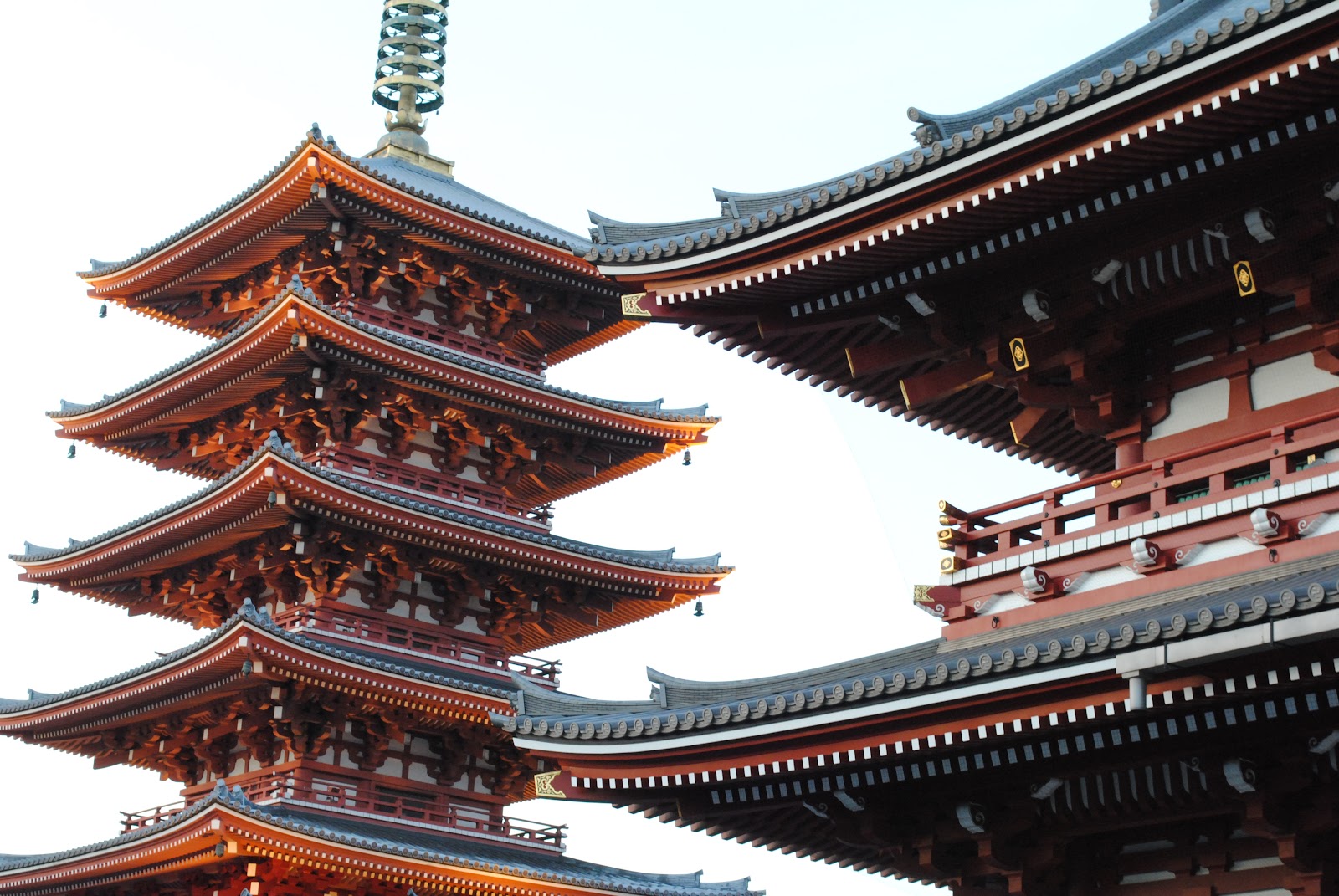
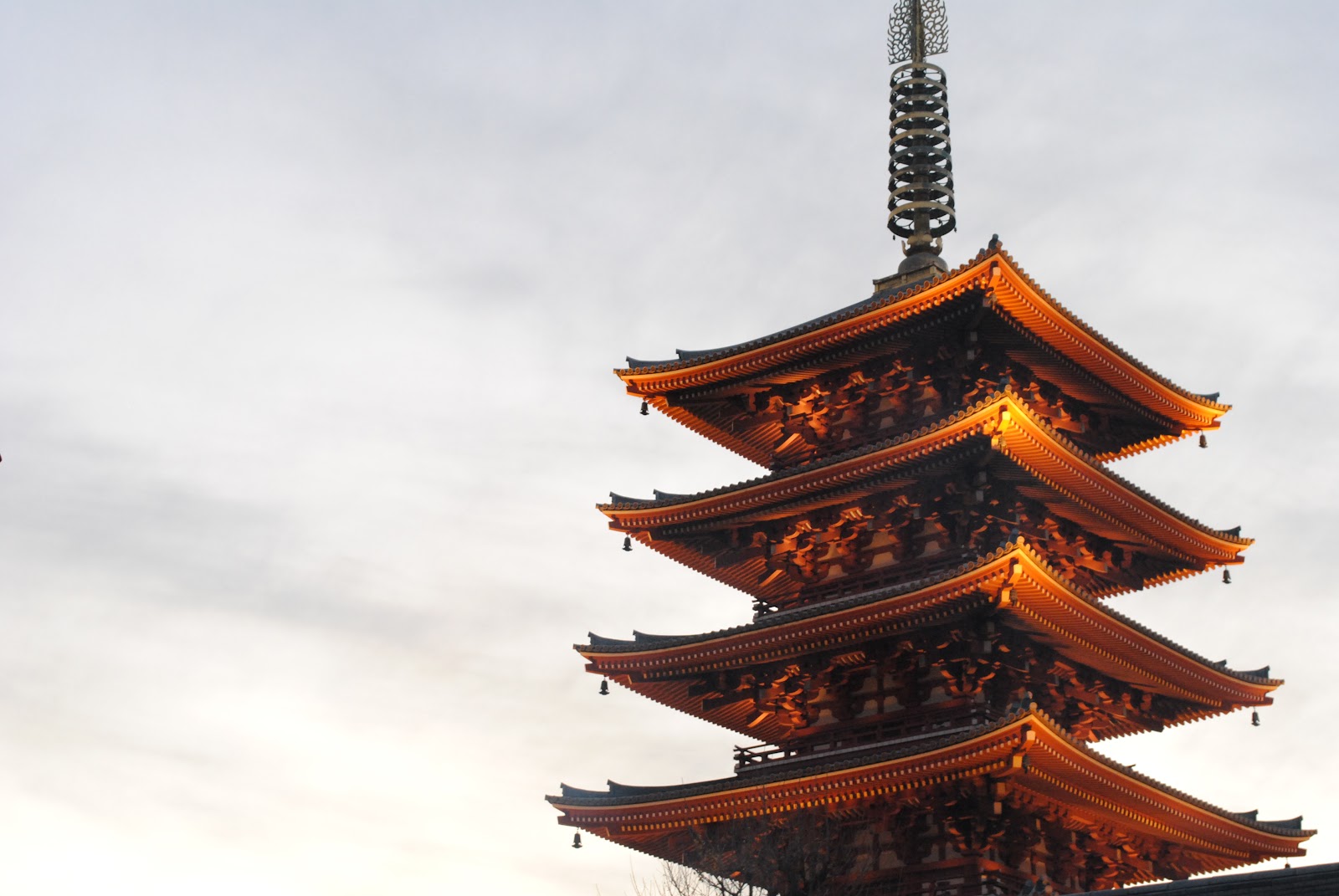
Stopping only to drop off our bags after travelling all day, we eagerly walked the short distance from our motel to the ancient Buddhist temple Sensō-ji. It is Tokyo’s oldest temple, founded in the year 682 dedicated to the bodhisattva Kannon. Before the entrance of the temple there is a long street of shops called Nakamise-dōri selling mostly souvenirs and touristy junk that is wall to wall people. Although I could have done without visiting Nakamise-dōri, the temple itself was incredible. There were several different pagodas with huge lanterns, ornate architecture, and opulent paintings and statues. Like many other temples, there is a place for you to wash your hands before entering the inner complex. There was also a large caldron with burning incense where visitors can douse themselves with the smoke. There was also a place where visitors can throw coins and pray to the bodhisattva Kannon. I don’t consider myself a particularly spiritual person but something about the temple, maybe simply feeling its immense historical importance or seeing all these different people, from all over the world, be united in its majesty, made me feel overly emotional. Whatever it was, it was a feeling that I’ll never forget. 

After visiting the impressive Sensō-ji temple, we took the evening to get our cultural bearings and walk around the Asakusa area where we stayed. It’s a much older area, and as such, seemed much more peaceful and stoic. Many of the streets are pedestrian only so thousands of bicycles line up on every block. We did stumble upon one chaotic thing here however, Pachinko. It is a type of casino game kind of like pinball, where little metal balls drop down a vertical maze thing and if it goes into a particular hole, you win more metal balls. Although not the most exciting casino game, it is certainly the loudest. In Pachinko parlours with hundreds of machines, the sound of the metal balls is deafening and you can hear it from almost a block away.
Very hungry from a day on our feet, we went for an amazing dinner in a very small Japanese restaurant specializing in chicken. Situated down a dark alleyway, it was smaller than a city bus, and only had three staff members. We sat at the bar overlooking the kitchen so we could watch the two chefs prepare and cook every meal. Although they spoke little English and had no English menu, they were very gracious and gave us many samples of differently cooked chicken. We had yakitori, which is like a ball of ground chicken on a skewer, fried chicken skin, and seasoned chicken thigh cooked over an open flame. It was accompanied by rice, many different sauces, beer, and of course warm sake. I refrained from taking any photos, because well I thought it might be tacky, but considering it was one of the best meals in my life, I’ll never forget it anyway.  After dinner we walked up to the Asahi brewery building, which very fittingly is shaped like a giant mug of beer, and back to our motel for an early night sleep.
To save a few extra dollars, we stayed in a capsule motel for the first two nights of our trip. Similar to a hostel in style, the capsule motel is a newer phenomenon in Japan, a place for tourists and people on business who are simply looking for a bed and nothing more. Basically the idea is that there is a large room that instead of bunk beds, it has ‘capsule’ like cocoons that are walled in with only an entrance at one end. Although I thought it might feel like sleeping in a coffin, it was actually quite spacious and comfortable. Considering that often when you are travelling, you hardly spend any time in your room anyway, the capsule motel is a practical option at a very affordable price. 


Incense burning at the temple


Nakamise-dōri shopping street

Asahi Brewery building, 

Peaceful streets of Asakusa


3.1.12

Japan the Series: Prologue

     "I think I'm turning Japanese!" Just returned from our trip to Tokyo and it was incredible. Over the next week or so I'll be writing blogs and posting pictures from our trip divided into each of the days that we spent there. Overall the trip was a huge success, even despite an earthquake (which we did not feel at all). I have to admit, it was a little hard to come back home. It was a great to see another Asian country to give us a little perspective on the subtly of each different culture and their traditions. I also think having been in Korea for three months meant we were able to spare ourselves from a bit of the initial culture shock and certainly the jet lag. Here are a few of the highlights that I thought the country had to offer.


A Few of the Best Things about Japan


The Subway System - This probably goes for every major city but it really makes the world of difference while travelling. Over the course of 5 days, we probably took about 30 subway rides and if you buy an economy all day pass it is definitely the best way to get around. Our only complaint is that the subway ended at 12:30pm except for on New Year's Eve. But the Japanese have a pretty good remedy for this, just stay out till the first train in the morning!


Japanese Food - Cam and I both don't like sushi (I know it's shocking) so we were a little skeptical of the cuisine that we would be tasting in Japan. But I'm happy to say that we were both blown away by the food that we had there. Bowls of ramen, soba noodles, tempura, rice, and curry were some of the highlights.


The Streets - Although Korea is beautiful in its own way, it isn't the most aesthetically pleasing place I've ever been, especially since British Columbia is hard to compete with. But Japan was a breath of fresh air, even in such an immense city as Tokyo. The architecture was astounding, always mixing the traditional and avant garde modernity. There was a lot more green space, with numerous parks, and rivers. The streets were, for the most part very clean and well kept.


Language barrier - Compared to Korea, there was a lot less written English in Japan like on signs and menus. However, it seemed as though a lot more people spoke at least a little English and were eager to help you out. 


Vending Machines - In Japan, you can find almost anything in a vending machine and they are everywhere. Sure it's a bit of a novelty, but being able to buy a beer from a vending machine is pretty damn cool. 


Heated Toilet Seats - It's as every bit magical as it sounds.

The only real downside to Japan was that it was, as everyone told us it would be, quite expensive. Food, drinks, and accommodation were much more expensive compared to Korea and moderately so to Canada. At a couple of restaurants, a beer would set you back at least 11 dollars and cabs can start their rates at 15 dollars. That being said, it is easy to save on some things in Japan so you can afford to do a couple of more lavish things that the city has to offer. There were many free attractions, like visiting parks and temples, the fish market, or observation towers over the city. As with any city, simply walking around and taking in the energy and sights can prove to be entertainment. As for food, stay off the beaten track and go where the locals go, places just off the main streets can be much cheaper. As embarrassing as it sounds, we had a few meals at McDonalds because it was so affordable and their coffee is actually not bad. By going there, even though it hurt our egos a bit, we were able to spend some more on incredible dinners in the evening. 


2.1.12

Happy Holidays from South Korea!

   This past week has been full to the brink with some well deserved vacation and fun time. Although being away for Christmas was a little emotionally tough, I couldn't have asked for a better couple days considering the circumstances. We kicked of the holiday weekend with a Christmas themed pub crawl called 'the 12 pints of Christmas' with some fellow teachers and friends. For Christmas Eve, the same group of foreigners got together at a local pub who offered their kitchen and tables to us so we could have a pot luck dinner and secret Santa giveaway. The food was incredible and was complete with all the right homestyle dinner fixings including a turkey, gravy, mashed potatoes, stuffing, and a lot of other things. There was so much food that everyone was able to go home with at least one plate of leftovers. For Christmas day, we opened presents around our very small but perfect tree, followed by a huge breakfast and a puzzle. All in all, quite the festive and lovely Christmas in Korea!


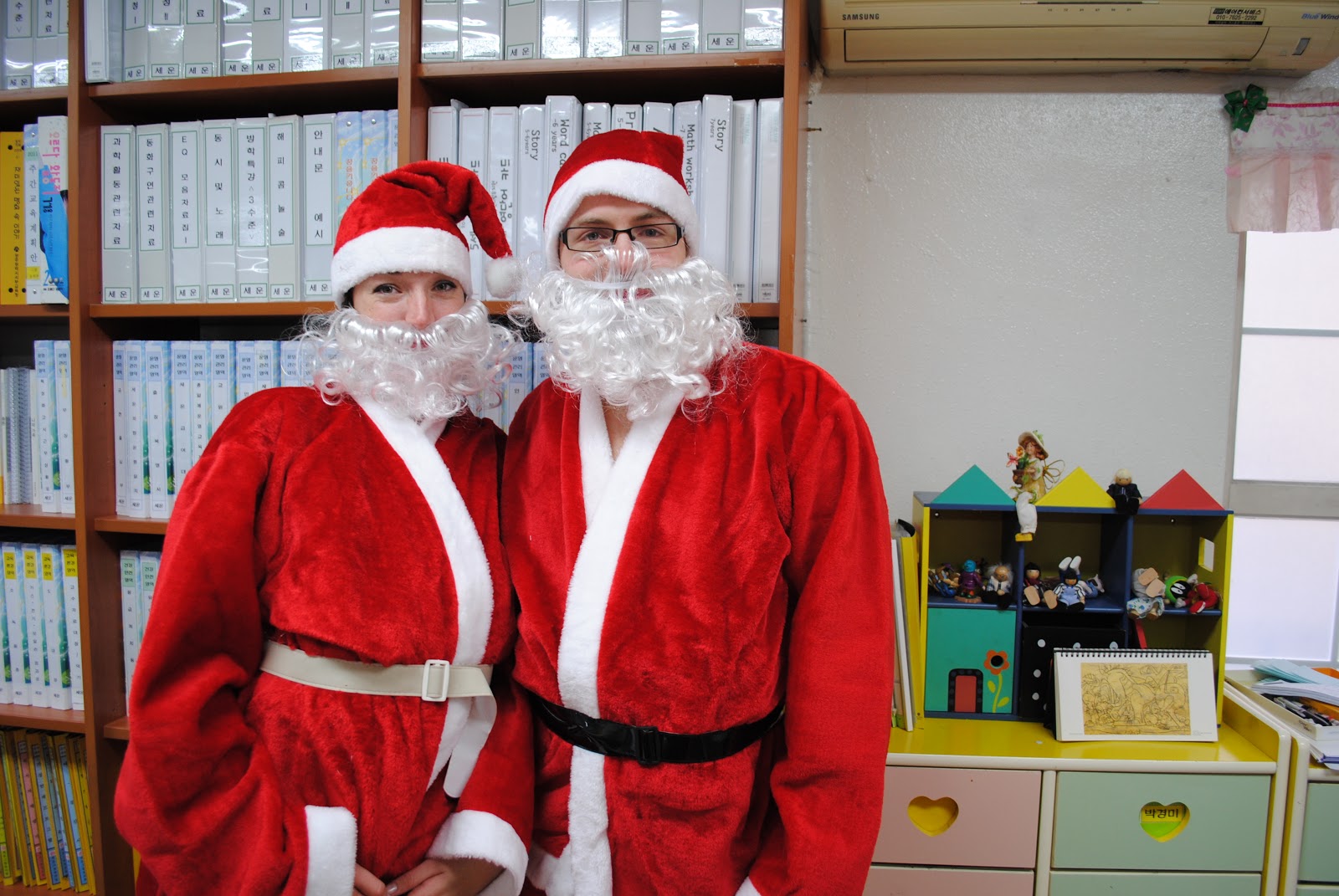
Santa teacher!


One of the 3 tables full of food at the pot luck dinner!